Joyride, by Jack Ketchum

Jack Ketchum’s writing is astonishing.

Pretty much as soon as I started reading this book, my entire body wanted to clench up. Literally. I usually read in bed before turning in, and by the end of the first chapter I had to remind myself to relax – it’s only a story.

So Ketchum really knows how to ratchet up the tension and keep it there.

Impressive.

The guy is talented. However, despite that, I didn’t like this book. I’ve read one or two other Ketchum books – since he is often found lurking in the horror section of Barnes and Noble – and even though they definitely had an effect on me, it wasn’t one that I liked.

Joyride is the story of Carole, an abused ex-wife, and Lee, her lover. They plot together to knock off Carole’s ex, since he can’t seem to either stay away from his ex-wife, or to keep his hands off her. The police, of course, see nothing and do nothing since the ex is a local, powerful businessman (is there any other kind in these stories?). The plan? Lure the ex to a secluded place in a nearby public park – lots of woods, hiking trails, and varied topography. You get the picture. Then, after a rather clunky murder of the ex, Carole and Lee take off, shocked by their experience, but also relieved. Like, Thank God, that’s over.

Except that it’s not. Up on a hill, looking down on them the whole time, is batshit-crazy Wayne. Wayne had just been in the process of trying to strangle his girlfriend while having sex with her, but it wasn’t working out. She gets up and leaves in a huff – and Wayne lets her go. It is here that Wayne’s character – bored, fickle, randomly violent – starts to emerge.

(I always cringe for the close-encounter- almost-victims in fiction and true stories: Girl, do you know how close you came…? Shiver.)

Anyway, Wayne watches the desperate lovers do the deed. Then when a nervous Lee glances up to see if anyone is around, Wayne recognizes Lee as a sometime-patron of the bar where he works.

Ouch. More randomness at play.

In that moment, Wayne mistakes them for his long-lost soul mates in murder and decides to make friends. It’s kind of all downhill from there for Carole and Lee as their lives descend into a pit of murder, rape, torture and mayhem, courtesy of their buddy, Wayne.

Joyride is not exactly like a written version of a gore-fest movie since there is an effort to create real and sympathetic characters with Carole, Lee and Lieutenant Rule, but it’s kind of a limp-fish attempt.

The depiction of Carole as an abused ex-wife felt like a checklist job. I also felt like Lee was just going through the motions of acting as the ardent, righteous lover who saves his girlfriend from her nasty old man. Towards the end, there, I honestly thought he was going to tell Carole, Bitch, you are too high-maintenance for me. I am outta here. But then he got killed before he could. Lieutenant Rule, the one cop in town who’d kept half-an-eye on Carole’s plight while she was going through hell, seemed like he’d wandered out of a different novel. You know, like maybe a detective story where he was the protagonist?

The real star of Joyride, though, had to be Wayne. He was a realistic, creepy psychopath; there’s no denying it. The fact that he was an amalgamation of two real-life psychopaths only made him stronger, in my opinion.

Speaking of that, a few people have complained that Ketchum basically steals his story ideas from true life situations and people. There is nothing wrong with this. We all do it to some extent as writers, and remember – Robert Bloch did it with Psycho and everyone loved it.

As far as I’m concerned, Ketchum is a terrific writer. His stories grab you by the throat and squeeze, turning your head towards the horror that waits.

I just wish that horror was something more interesting than humanity at its worst.

Seven, directed by David Fincher

I’ve had a complicated relationship with this movie. I’ve seen parts of it, several times, whenever it’s been shown on TV. Once or twice I might have seen most of it, but because it was so damnably QUIET I was never sure what was going on, or who was doing the killing. So this time I rented the DVD from the library and activated the closed caption feature.

Voila! Now I know what the hell is going on.

As it turns out – quite a lot.

Here we have one of the serial killer classics – a killer with an axe to grind.

Or, as I like to call it – a Guy with a Theme.

This guy’s problem is that humanity is corrupt, and so the best way to point this out to the blind masses is to make an example of seven “lucky” winners – by killing them. This killer, known only as John Doe (and played by the delightful Kevin Spacey), is a big fan of the Seven Deadly Sins.

And, as every writer knows, once you have your theme down, everything else just falls into place. Now, armed with his list – gluttony, greed, sloth, lust, pride, envy and wrath – John Doe sets out to teach the world “A Lesson”.

However, unlike most of the serial killers we’ve encountered in this course, John Doe is very fastidious. He prefers to have his victims kill themselves. With a little firm “encouragement” from him, of course. You’ll thank me later, he no doubt tells them.

So, what can we make of a serial killer who never actually kills anyone himself … oh wait, that’s not quite true. At the end he does kill Tracy Mills (played by a luminous Gwyneth Paltrow), doesn’t he? He kills an “innocent” – someone who was not guilty of any of the seven deadly sins herself – but who was “responsible” for making him guilty of the sin of envy.

How’s that for evil?

Other than that little slip up at the end, though, John Doe is a clever, and well-read, killer. He has the detectives assigned to his case – William Somerset, played by the always-great Morgan Freeman, and David Mills, played by the always-hot Brad Pitt – scrambling to figure him out. They even – gasp – have to visit the library to do research. (In one of the few light moments in the film, Brad Pitt receives a suspicious-looking item in a crumpled brown bag from a shady-looking guy in a trench coat – the Cliff Notes to Dante’s Inferno.)

John Doe is a terrific serial killer (the smart ones almost always are, The Sculptor being an exception), because once you figure out what The Theme is then it’s more like a game – which sin is next, and what will he do to punish the perpetrator?

Plus, serial killers with a Theme usually don’t just pick on women when they are making their point – unless, that is, their point is All Whores Must Die

– so we get that whole equality thing going on, which is nice.

Now having finally seen, and heard, the entire movie, I heartily recommend “Seven” to anyone who loves serial killers. And to all you darkness freaks I say – John Doe is a worthy addition to your messed up collection.

Taxi Driver, directed by Martin Scorsese

One of the greatest films of all time, Scorsese’s look at the disintegration of American culture following the Vietnam War won four Academy Awards in 1976.

Robert DeNiro as Travis Bickle – electrifying. Twelve year old Jodie Foster as child prostitute Iris – astounding.  Everything, and everyone in this film was so realistic, and so good, I could smell the sweat pouring off these guys – summer in New York City before everyone had air conditioning – fuhgeddaboutit!

I hadn’t seen this movie since it originally came out, so I’d forgotten how slowed-down it was in places. Not “Blade Runner” slow, but pretty damned close. This wasn’t a deal-breaker, but it did require the viewer to forget the last 40 years of movies and just go with it. Slow down a little, baby. It’s worth it.

Travis Bickle, our Vietnam vet, has chronic, pernicious insomnia (probably as a result of what he’d seen, and done in Vietnam, although it’s never spelled out). So he figures why fight it? He will work a night job, like drive a taxi. Genius. And it’s as a New York City cab driver that Travis gets to see the city’s, and by extension the country’s, dark and dirty underbelly – violence, crime, drugs, prostitution – it’s all there, all night, every night. The result is that it just feeds, and feeds, Travis’s growing rage.

I had my doubts about this assignment, because even though Travis Bickle does technically kill several guys, they are all bad guys! Travis is not your mother’s serial killer. He is instead a vigilante of the highest order – a good guy who knows all this shit is wrong – and he tries to right that wrong in the only way available to a small fry like him. (And no, the answer is NOT through a vigorous leaflet campaign, or by voting for the best candidate.)

Travis gets a gun; in fact he gets a LOT of guns. He practices, he poses – there’s his iconic “You lookin’ at me?” line – and just generally prepares for … what? With a problem as big as “What is wrong with America?” it’s hard to know where to point the gun. Travis flirts briefly with shooting a local politician, but then doesn’t. Although it’s never made clear, I figured Travis chickened out because the guy was too much of a cardboard cutout. There were bigger, more immediate threats to humanity right there in his own backyard. Enter Jodie Foster’s character, Iris. Travis had encountered her briefly when she got in the back of his cab one night, only to be pulled out of it a moment later by her pimp. The pimp, Sport – played by a dazzlingly young Harvey Keitel – tosses a $20 bill at Travis and tells him to “forget about it.”

But Travis can’t. He finds the pimp and pays to meet with Iris. Only instead of adding to her degradation, he tries to save her. He tells her this – prostitution – is “No kind of thing for a person to do.” I love that. He could have gone so many ways in his condemnation – you’re just a kid, prostitution is wrong, it’s a sin, blah blah blah – but instead, he looks at Iris and sees a person. Not an “unfortunate” or a “stupid kid” or a hopeless slut, but a person who should be living a real person’s life. Unable to convince her to leave the life she’s grown accustomed to, he returns later, only this time as an avenging angel.

The violent and bloody gunfight that ensues ends with a bunch of bad guys dead, a seriously wounded Travis Bickle, and a crying Iris huddled behind the couch. The police arrive and the newspapers make Travis a hero. Iris’s parents later write to him, thanking him for saving their daughter’s life – she’s back home with them in Pittsburgh and going to school. Travis even re-connects with a woman he tried to date earlier, Betsy, played by Cybil Shepherd.

There has been some speculation that the ending was all just a dying dream, and that Travis actually dies in the shoot-out. However, I think that Scorsese wanted to show us how whimsical fate can be, and just how thin the line between villain and hero can be sometimes. If Travis had been a little quicker with his gun and actually shot the politician instead, he would have been reviled as a murderer. Instead, he kills a pimp, a drug dealer, and a Mafioso – all to save a little girl’s life – and becomes a hero.

As far as I’m concerned, Travis Bickle did not fit the psycho stereotype we’ve come to know and love — no messed up childhood filled with physical and sexual abuse, and killing isn’t the only way he can find emotional satisfaction or sexual release — he was just a guy who got pushed to the edge, and who finally fell over it.

Helter Skelter: The True Story of the Manson Murders, by Vincent Bugliosi and Curt Gentry

Charles Manson is the first, and only, “true crime” serial killer we have looked at in this course. He is also the only serial killer to come with his own soundtrack, specifically The Beatles’ White Album. He was convinced that every song on the album held hidden significance aimed only at him. He was a lot like Stephen King’s Annie Wilkes in that he felt his musical idols, The Beatles, were speaking directly to him in their music. Only instead of creating romantic fantasies as a result of this belief (like most starry-eyed fans), Manson became convinced they were telling him to start a race war with their song lyrics, specifically the song, “Helter Skelter.”

This book is the work of the prosecuting attorney – Vincent Bugliosi – who was pretty much responsible for realizing that a seemingly unrelated series of murders in the Hollywood hills actually were related.  And, that they were the work of one man and his “family”. It was fascinating for the most part, even when I felt like I was getting bogged down by the weight of all that detective work.

Charles Manson, like nearly all of our fictional serial killers, had a shitty childhood. As a result, he’d spent most of his life in prison by the time of the murders. And of course, he has been in prison ever since.

Manson is a lot like John Doe, the serial killer in “Seven” in that he gets others to do the actual, messy killing. Only in his case, the motivation is not personal, or sexual, or moral. It’s political. With a little crazy thrown in there for good measure.

Nowadays it’s hard to imagine what was passing for philosophical thought and political discourse back then, but personal charisma went a long way towards smoothing any rough edges. And Manson apparently had that in abundance. Even so, it is hard to imagine all the hopeless drifters wandering around looking for something to believe in. Instead of joining the Peace Corps and making the world a little bit better, they ended up being part of a “family” who believed their leader was a man of vision who would help them survive the coming Armageddon. The fact that they were creating the seeds for that biblical event by committing these shocking, high-profile murders seems to have only made it sweeter.

If this post has not been full of my usual, snarky comments and wacky pictures it’s because, unlike every other killer we’ve encountered this term, Charles Manson and his “family” of weak-minded toadies was real. And their victims were real. Somehow it’s not as much fun poking holes in a serial killer’s motivation and methods when it’s the real thing. Manson is still alive, and still in prison. Most of the “family” is also alive. Before “Helter Skelter”, Manson was a wannabe singer-songwriter, and a number of musicians have recorded his songs.  There is a Charles Manson Fan Club.

Helter Skelter, the bookwas an amazing opus, an operatic rendition of the end of the Sixties. Complete with all the trappings – sex, drugs, rock and roll … and Death. If you were alive then, and you ever had a moment when you thought it would never, could never end – the publication of this book, with its 50 pages of black and white photographs of all the victims, their houses and properties, along with almost 700 pages of painstaking details and mind bogglingly horrifying facts was the final, orchestral blast of the decade. Kind of like the last song on another Beatles album

The Silence of the Lambs, directed by Jonathan Demme

There is so much going on in this movie, so many conflicting sensations. It’s like standing in the surf up to your waist in the middle of August – you have the light and heat of the sun beating down on you, the chilly water sluicing around your body as the waves rise and fall, the soft sand between your toes, and the knowledge that most shark attacks occur near shore in two to three feet of water.

Part of the fun of this movie is having not one, but two, serial killers to play with, er, worry about. The first one we’re supposed to worry about, Buffalo Bill (played by the always delightful, and always surprising, Ted Levine).  Bill is running around killing and then skinning women (thank God it’s not the other way around), and making the FBI crazy. And the second one who is “safely” behind bars, Dr. Hannibal Lecter (played by a chillingly urbane Anthony Hopkins). Lector is a brilliant psychiatrist and a bloodthirsty cannibal.

When the calculating head of the Behavioral Science Unit, Jack Crawford (Scott Glenn), sends little FBI trainee, Clarice Starling (Jodie Foster), to go see Dr. Lecter on a fake “mission” to get his serial killer profile it made me cringe. Talk about sending a lamb to the slaughter! However, as is often the case, by the end of the movie everyone in this little threesome gets more than they bargained for.

I have to admit I felt sorry for Buffalo Bill. He was all kinds of messed up and it looked like he had experienced a bad childhood along with mental illness. He was horribly alienated from himself (suffering from gender dysphoria), and other human beings as well. His classic line, “It uses the lotion on its skin, or else it gets the hose” when speaking to one of his captives pretty much says it all.

The U.S. Senator’s attempt to humanize her captive daughter on TV definitely fell on deaf ears in his case. Besides, I don’t think Bill even owned a television.

On the other hand, Dr. Hannibal Lecter is a whole different kind of serial killer. Unlike Buffalo Bill, Lecter finds it easy, maybe insultingly so, to hide what he is. He’s smart, wealthy, accomplished … he could easily be living a great life, but instead he’s driven by dark desires to do unbelievable things.

At least, we hope he’s “driven” by those desires, and not the other way around. Unlike Buffalo Bill, Lecter seems more “driver” than “driven” when it comes to his murderous impulses. Then there are those creepily heightened senses he possesses – smell definitely, hearing yep, taste probably (ick). Lecter the psychopath is the kind of over-endowed human being who makes me wonder just where humanity is heading, evolutionarily speaking – smarter and kinder? Or smarter and crueler?

But let’s leave these two losers behind, and talk about Clarice Starling. Smart, driven, unbelievably tough – I want to be just like her when I grow up. It is Starling, with her “good bag and cheap shoes” who pierces through Dr. Lecter’s egotism and boredom, causing him to recognize her for that rare bird, an authentic human being. Dr. Lecter, to his credit, returns the favor and acknowledges Starling’s worth and professionalism. (Something it takes her boss, Jack Crawford, an entire movie to do, by the way.)

So it’s no surprise at the end when she could conceivably shout at Crawford (who is slowly going upstairs), and tell him Lecter is on the phone right now, but she doesn’t. You could take the cynical approach and say Lecter was playing Starling (and who would know how to better than him?), but I think at the end they were just two outsiders who’d grown to respect, and maybe just a little bit, like each other.

Misery, by Stephen King

stephen_king_misery_cover

Misery is a fascinating work on so many levels.

First, it’s a horror story about a popular genre writer, Paul Sheldon, who finally meets his “biggest fan” – former RN (currently moonlighting as a serial killer) Annie Wilkes – much to his everlasting chagrin. Second, it’s a mystery full of tension, intrigue, and misdirection – how on Earth is he going to get out of this mess? Third, it’s kind of a “how-to” book on writing that I think many of us newbie writers really appreciated — like getting to look “under the dinosaur’s skirt” to see what’s what.

And finally, there’s a pretty decent romance in there – what could be called the “romantic misadventures of Misery Chastain.”  Misery is the beloved heroine of an equally beloved series of romance novels. Beloved by everyone but the author, that is. It’s when writer Paul Sheldon decides that Misery has ripped her last bodice that he truly comes to know misery.

Annie Wilkes was a terrific serial killer. She is a refreshing break from the serial killers we’ve seen so far – she’s female, she has no “message” she’s trying to convey to the idiot masses, she doesn’t appear to have had a tortured childhood, and she doesn’t rape and sexually torture her victims. To be fair, she does torture Paul. A lot. But she agreed he had it coming, so it’s okay.

One thing she does share with one of the other killers we’ve read about so far – nursing. The Sculptor was a nurse, who used his nursing skills to both take care of his invalid Dad, and to keep his victims alive until he needed them dead. Annie is a de-frocked nurse (is this a thing, because if it’s not, it should be) who played one of those “Angel of Death” nurses until she got caught, and afterwards, she just uses her skills, and strength, to keep her favorite author alive until he finishes “her” book.

Apparently, nurses freak more than a few people out.

Another thing Annie shares with the other kids, er, serial killers, is her uncanny ability to notice that a knickknack on a table got moved by half a centimeter. She also has a kind of supernatural insight into other people’s motives – like when they’re trying to be her “friend” just long enough to kill her and escape. Those dirty birds.

While both of these “abilities” might be cool in a non-serial killer person, they are downright frightening in someone like her. Especially if you’re one of the people on the wrong side of the victim/serial killer equation.

This is what happens when Paul Sheldon finds himself in Annie’s “care” – it’s a nerve-wracking game of cat and mouse, or shark and octopus. (And if you think you know who will always win in a game between those two, you haven’t seen the video.) Trying to anticipate, reason-with, please, or otherwise deal with a truly crazy person looks like exhausting work. Even more so when you’re horribly wounded, like Sheldon was, and nobody — not even your agentknows where you are.

This is actually the second time I read this book. The first time was when it first came out. To be honest, back then I thought Meh. It was one of King’s earliest, if not the earliest, non-supernatural horror story, and frankly, I wasn’t that impressed. People being horrible was nothing new. Give me something freaky and monster-licious, or else! But I’ve grown up, slightly, and now I can really appreciate all the levels of horror King had going on in this book. Just so, so good. Read it!

Red Dragon, by Thomas Harris

red-dragon

As it says on the cover of my copy of the book: “The terrifying classic that introduced Hannibal Lector.” Yes, Dr. Lector is the kind of doctor that will give you nightmares. If you live long enough to have any, that is. And what’s amazing is Lector just “popped up” out of nowhere when Harris was writing this story. That’s got to be both fortunate for the author (because Lector made Harris rich and famous), and very, very chilling. It almost makes me believe in the supernatural power of … what? The power of evil fictional characters to summon a writer to tell their story? Gah! Creepy. Let’s leave Lector for a bit, since this is not really his story anyway. He’s only a guest here.

The real star is the Red Dragon, or as the media calls him, The Tooth Fairy.

Francis Dolarhyde, the Red Dragon’s alter ego, is a very disturbed boy. Plagued with both a harelip and a sadistic grandmother, Francis never has a chance. I believe this is one of the first serial killer thrillers based on then-current FBI knowledge and techniques. Harris actually had to visit the FBI to do research for this book, so it was all pretty damned scary when this was published in 1981.

So, I loved the Red Dragon as a killer – he was twisted, smart, and poetic. That whole “dancing naked in the moonlight while covered in your victims’ blood” thing is just beautiful. And just how crazy do you have to be to track down your soul/nemesis in the Brooklyn Museum, and then, instead of admiring it, or even stealing it, you eat it!

Let’s not forget, either, the horrible, horrible fate the Dragon inflicts on poor, hardworking, tabloid reporter Freddy Lounds – he bites off Freddy’s lips and lights him on fire, sending Lounds’ blazing wheelchair down the hill towards his newspaper’s building. Ah, they don’t make serial killers like that anymore, do they?

Will Graham, the FBI profiler, was very good too. This earliest version of what’s become by this time an almost psychic character in our culture, Graham doesn’t make giant leaps of intuition when considering the serial killer. Instead, he suffers “profiler’s block” and bumbles and stumbles around, like a blind man in a strange room. This makes him both more realistic and sympathetic. Nevertheless, Graham does have something special when it comes to figuring these guys out. I see it as mostly a willingness to quit “focusing” on the killer, and to just daydream about him a little. That’s how he realizes that the killer already knows what he’s going to encounter at each scene, because he’s already seen it! Eureka.

Hang onto your butts, people, because I can’t think of a single, damned thing to complain about in this novel. It’s well-written (and if there were any POV shifts in there, I never noticed them), the characters are awesome, and the science feels realistic and plausible. I even liked the movie version, “Manhunter”. Haven’t seen the remake yet, but I hear it’s also good.

So, even though many people only know of this book because it included the first appearance of Doctor Cannibal Lector, there was a LOT more good stuff going on in there. Read it for Lector, sure, but savor the rest of it too. It really is very tasty.

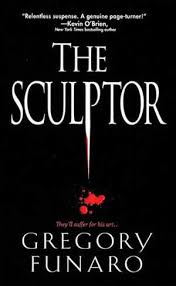
The Sculptor, by Gregory Funaro

the-sculptor

I feel like I’ve become a crotchety, old sourpuss with all my reviews lately, but publication brings with it some answerability I think.  So here goes nothing.

On the plus side, this novel has no artsy-fartsy unreliable narrator – yay. The story is focused on the serial killer and his victims – also yay – and, like all the best killers, this killer had a “theme” – he wants to rouse humanity from its media-induced slumber.

But for some reason, this killer – The Sculptor, fka Christian – decides that the best way to do that is to recreate some of Michelangelo’s greatest sculptures  with dead people?

Boo.

The Sculptor himself is a hunka hunka burning love – six foot five inches tall since he was seventeen, and built like a brick shithouse (as my mother used to say) – but with deep emotional scars in all the right places. His mama was a whore who beat and abused him, while his saintly father ends up paralyzed in the car accident that killed his mother and left him a rich man. He abandons dreams of a history degree to become a nurse and take care of his invalid father.

As others have already pointed out, the Sculptor is just too good to be true – he’s big, strong, smart, wealthy, and artistic – what does he need to kill for? His life should be freaking perfect. And yet, he feels compelled to teach humanity a lesson in one of the most pointless, awkward displays of artistic imitation the world has ever seen. Because, let’s face it, this guy is just trying too hard to “shock and amaze” everyone with his ridiculous sculptures.

Not content to mind his own business, the Sculptor has to drag in Dr. Low Self-Esteem, er, Cathy Hildebrant, to his little crazy party. It was supposedly her book about Michelangelo, Slumbering in the Stone, which awakened him to his true calling. So he can’t even think of his own, original reason to be a serial killer – he has to steal it from someone else.

The female lead – and I use the term sarcastically – Cathy Hildebrant is a tenured professor of art history. She is also, if anyone is checking, “very pretty.”

Thank Christ. I hate those “not pretty” or “somewhat pretty” professors.  She also strays dangerously close to dishrag status in this book with a lot of gratuitous mooning over FBI Special Agent Sam Markham.

Markham’s job is to trade large chunks of tedious exposition with Hildebrant, but it’s very cleverly disguised as dialogue.  Oh, and he’s there to catch a serial killer, too. Honest.

I’m not exactly sure how Funaro does it, but he manages to take something interesting, and turn it into a hard slog. The going was toughest, I thought, right around Chapter 43, when we’re in The Sculptor’s head and he alternately refers to himself as The Sculptor and “the boy named Christian” for eleven fun-filled pages …

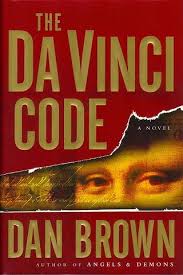
Don’t get me wrong – I love a well-researched book about a fascinating and brilliant Renaissance artist as much as the next person – but Dan Brown did it better in The Da Vinci Code. 

da-vinci-code

The Church of Dead Girls, by Stephen Dobyns

I find myself, yet again, of being able to appreciate the way a book is written while still disliking the book.

The good stuff – the small town in upstate New York, Aurelius, is brilliantly portrayed as a cauldron of fear, doubt and paranoia as three teenaged girls disappear over the course of a few months. The discovery of their bodies, in the prologue, shows us the what and where, but not the who or why. So, with the so-called “important stuff” – the bodies’ discovery – out of the way right at the start, the author then takes us through the whole story. From the beginning. Because the real horror in this story is not the dead girls, dead-girls

but the cataclysmic way the town disintegrates once the townsfolk realize there’s a killer among them.

The careful, even loving, attention that Dobyns lavishes on his large cast of characters reminded me of how Stephen King populates a story, and so it didn’t bother me. I liked, too, how the author took his time to show us the town’s decline into vigilantism and madness once the killings/disappearances started. Dobyns treats us to his acutely perceptive vision of a town on the edge in a way that is both realistic and chilling. The self-appointed “police helpers” vigilante group was especially creepy, and totally believable.

My main gripe with this story is, once again, the unreliable first person narrator. This narrator – who is sort of revealed very near the goddamned end of the story – as a nameless, gay, male high school biology teacher, knows things about the characters and events in this story that only an omniscient, third-person narrator would know.

But what do I know?

I’ll tell you what I know. I know that on page 242, Chapter Friggin’ 30, the book falls into a limited omniscient POV for awhile, and then slips into an omniscient POV for awhile, and then back into the first person for some chapters. This is kind of the problem with slow, cerebral “thrillers” like this – not only do they encourage you to slow down and think, you actually do just that. And that’s when you notice stuff like this. I have to say, though; even before I saw the POV shift, I was getting increasingly annoyed with this mystery narrator – who the hell is this person, and when am I going to meet him/her?

Despite this kind of trivial stuff, the story is top-notch. It is a different kind of horror story that still manages to include sympathetic victims, a crazy serial killer, and a lot of suspense and misdirection.

It also has a great title. It’s just not the kind of horror story I was expecting or hoping for.

Dobyns, Stephen. The Church of Dead Girls. Henry Holt and Company, Inc., 1997. Print.

American Psycho, by Bret Easton Ellis

Oh, American Psycho, where to begin?

Let’s begin by saying that this is a brilliant piece of work. As a boots-on-the-ground view of the materialistic madness of wealth-obsessed, alienated, depraved yuppies in Eighties’ New York City, this book positively vibrates. Starting on page one, Ellis drowns us in designer labels as the narrator, Patrick Bateman, meticulously, obsessively notes the provenance of every tie, jacket, pants, dress, scarf, shoe, watch and pair of earrings within sight. Needless to say, a culture so completely self-absorbed in appearances – appearing wealthy, appearing cool – has no interest in, or energy for, looking beneath the surface.  Especially when that surface is so shiny.

In fact, one of the funniest continuing bits in this book occurs when characters constantly mistake acquaintances for someone else. Nobody seems to really know who anyone is. It is so pervasive that when Bateman kills one of his colleagues, Paul Owen, nobody notices.  In fact, people continue to see Owen in London months after his death, including Bateman’s own attorney who claims to have had dinner with him just a few days ago. It is this last bit of information, along with an odd, unsettling encounter Bateman has with the realtor showing Owen’s apartment to prospective clients that made me wonder if Bateman wasn’t an unreliable narrator. The fact that the cops never show up to question him about any of this can also be used to support the unreliable-narrator-he-dreamed-all-this-up argument.

Shudder.

To show you how much I hate unreliable narrators – I’d rather Bateman actually be a heinous serial killer than a delusional, or lying, unreliable narrator.

However one could also argue the scenario put forth by the author – large, crowded city full of materialistic, alienated people plus handsome, rich-guy psychopath striking at random – is equally plausible.

Whatever.

So, let’s talk about Patrick Bateman, the first-person narrator, or star if you will, of American Psycho. But first, a disclaimer – I am not the kind of person who cringes when I hear a bad word, or who faints at the sight of blood. I grew up reading extensively in the field of horror, both fiction and non-fiction. I’ve seen some godawful, nightmarish movies that should have never seen the light of day. I know people are capable of terrible things. For these reasons, and more, I believe I can safely say that I’ve read, seen, heard, written, and even experienced some pretty foul shit in my life.

But all of that pales in comparison to the misogynistic horror I see in American Psycho.

To be fair, times change and what was once shocking is now considered “transgressive”. Doing research on this novel I came across that word, so I looked it up. Transgressive fiction, I discovered, is a genre that deals with taboo subjects, like drugs, incest, cannibalism, and sexual activity, along with violence, urban violence, crime, and violence against women. Transgressive fiction is a thing, it is a recognized literary genre deserving of study and respect.

This from the Wikipedia entry on “Transgressive Fiction”: A literary genre that graphically explores such topics as incest and other aberrant sexual practices, mutilation, the sprouting of sexual organs in various places on the human body, urban violence and violence against women, drug use, and highly dysfunctional family relationships, and that is based on the premise that knowledge is to be found at the edge of experience and that the body is the site for gaining knowledge. Transgressive fiction shares similarities with splatterpunk,  splatterpunks  noir, and erotic fiction in its willingness to portray forbidden behaviors and shock readers…. Unbound by usual restrictions of taste and literary convention, its proponents claim that transgressive fiction is capable of incisive social commentary.

That phrase “incisive social commentary” is such an interesting, and auspicious, term. After all, when something can be said to have “incisive social commentary” then it’s good, right? And American Psycho has quite a bit of that, and it’s often funny –the aforementioned misidentification of characters; the nightly stampede to get into the newest, coolest restaurants; the slavish devotion to designer clothing – all paint a hilarious picture of poor, tortured yuppies in the Eighties. Also, does the novel also show “its willingness to portray forbidden behaviors and shock readers”? Check. Ellis shows he is well-aware of what would shock readers when he has Bateman kill a blind man’s dog, kill a child at the zoo, and torture and kill a rat that wanders into his apartment. You can almost hear the author chortling as he crosses these deaths off his list of taboos.

At first glance, Patrick Bateman seems like an equal-opportunity killer – he kills animals, men, women, children, young and old, rich and homeless, black people and white people, native-born Americans and immigrants, even some cops. So there’s your “violence” element, and the “drugs” theme runs throughout the novel.  It appears that American Psycho ticks off a lot of the boxes associated with this genre.

So what am I bitching about? It’s the “violence against women” part.

Because even though Bateman kills all kinds of people and animals, these are usually impulsive, spur-of-the-moment killings, shocking in their casual spontaneity. Bateman strikes then saunters off, the picture of harmless and blameless. Who, me? (I can actually imagine seeing Bateman committing one of these “casual killings,” and disbelieving my own eyes – Hey, did that cute, rich guy just kill that homeless guy? Nah. That’s ridiculous!)

But when he kills women, it’s a whole different ball game. Then Bateman makes an effort to show his charming side. At least initially. He makes plans, there are drinks (usually drugged), conversation, and there is even consensual sex. But it’s like all this “normal” stuff is just foreplay for Bateman’s real interest – the complete annihilation of the female body. He rapes, tortures, burns, mutilates, chops, hacks, electrocutes, slices, bites and eats his victims until there is almost nothing left of them. Once in awhile he’ll keep a finger, or a bit of hairy pubis as a souvenir. And he does this over and over again, recounting the sequence of events with the same obsessive detail he devotes to telling us about his wardrobe.

Plus, it is NOT okay that a literary/academic definition of a genre specifically mentions “violence against women” as one of its tropes. By comparison, is there a genre that includes “violence against men in kilts”  or “violence against armadillos”  as part of its definition?

I didn’t think so.

I haven’t seen the movie yet. I hear it’s a “black comedy”. They just made American Psycho into a musical, for crying out loud. A musical. This is why ironic literary types are so easy to manipulate – bookend your snuff porn novel with “incisive social commentary” and you’ve got yourself a cult classic. As I said in the beginning – brilliant.

On a related note, Bret Ellis has given quite a few interviews where he’s said, “Patrick Bateman is me, was me in New York then. I was living that life.” This made me think of all the times in the book that Bateman told people he was a killer, but no one believed him.

Hey, wouldn’t it be funny if …?

Nah. That’s ridiculous.

Ellis, Bret Easton. American Psycho. Vintage Books, 1991.

The Friendly Editor

Advice from an Editor's Desk

Weirda Curiosities

Paranormal Tarot Magick

Dirty Sci-Fi Buddha

Musings and books from a grunty overthinker

Really Awful Movies

Horror, action and exploitation movies that aren't really awful at all.

One More Story

Tell your ghost story. Read some of mine.

Ryu Cope

WRITER/FILMMAKER/URBAN MISFIT

Kristen Lamb

Author, Blogger, Social Media Jedi