Psycho: A Novel, by Robert Bloch

It was fascinating to realize that I had never read Robert Bloch’s book, Psycho. The Alfred Hitchcock movie of the same name was so iconic, that Hitchcock basically owned Psycho as far as everyone was concerned. So, it was with a surprising amount of trepidation that I picked up the book – I think I subconsciously expected a “movie adaptation”.

Of course, that was silly. Robert Bloch’s novel of a warped, psycho-killer/grave robber with mommy issues – frankly based on the crimes of the recently arrested warped, psycho-killer/grave robber, Ed Gein – Psycho was the book that started it all. Without Bloch’s masterful depiction of Norman Bates as Ed Gein we would probably never have had either The Silence of the Lambs or “The Texas Chainsaw Massacre,” and the world would be saner, but sadder for it.

As far as this book goes, I thought it was pretty well written. Although I did notice a few dreaded “filter words” in the beginning, Bloch either got his shit together very quickly and went deep third person POV for the rest of the book, or else I got so involved in the story I no longer noticed. It’s good either way. The only time I felt pulled out of the story, really, was in the beginning, when the author started dropping hints that Norman Bates was a fat, white psycho.

Anthony Perkins, as the movie version of Norman Bates, was tall, dark and handsome. So my brain rebelled at Bloch’s description at first, but after a while I got over it.

It’s hard to realize how much of a shock and surprise the Bates character was back when the story was first written. Serial killers were not only unknown, but anything psycho-sexual was considered too shocking for the average person to even hear about. Ah, the Fifties.

Anyway, thanks to Hitchcock’s movie, I had completely forgotten there were other characters in the story besides Norman Bates, his mother, and that girl in the shower.

Speaking of the shower – it’s funny, but I remember thinking, Gee, I wonder how Bloch handles that shower scene in his book. Imagine my surprise when he doesn’t handle it at all! The whole bloody, famous murder of Mary Crane (Janet Leigh) occurred while Bates was in an unconscious fugue state so there are no details. What the actual fuck? Thank God we had the equally talented, equally warped Mr. Hitchcock around to remedy that shit.

The author did go to the trouble of creating an actual story to go with his groundbreaking serial killer, incidentally. The girl in the shower stole a whopping $40,000 and ran off with it in an attempt to save her honorable, but stodgy fiancé from his indentured servitude in a hardware store. There’s also an insurance detective hot on her trail, an easy-going sheriff, and Mary Crane’s younger sister, Lila. Lila, I have to say, was quite the surprise. She was smart, brave, and a woman of action. Even when surrounded by a bunch of men who kept telling her, basically, Sweetie, don’t you think you’re overreacting a little here; she kept pushing, kept demanding that somebody find her sister. Come to think of it, Mary Crane was an unusual female character, too. She was just as smart as Lila – who she put through college while supporting her dying mom – and she took a big chance when she took that cash. I kind of wish she’d never stopped at that out-of-the-way motel.

Anyway, Psycho: The Novel – it’s the original psycho-killer story that all the ones that came after are based on.  Read it.
30 Days of Night, by Steve Niles and Ben Templesmith

I really liked this graphic novel. And not just because I caught the movie made from it on Netflix recently.

It had a brilliant premise – What better place to hold a vampire blood orgy than in Barrow, Alaska, where every year from November 18th to December 17 the sun never rises about the horizon? (Actually, according to the Alaska Public Lands Information Centers https://www.alaskacenters.gov/midnight-sun.cfm the sun stays below the horizon from November 18 to January 24, but “68 Days of Night” didn’t sound as cool, apparently.)

Be that as it may, we have a perfect horror setting – a small, human community huddled together in the cold, dark isolation of the Arctic – coupled with the perfect monster, a bunch of hungry vampires with time to kill.

As others have already noted, this story had some flaws.  Like how did a newbie vampire manage to vanquish the ancient, ridiculously powerful Vincent? Was it because Eben (the newbie in question) still had human feelings? (Puh-leeze.) The hypodermic needle Eben uses to infect himself with a former local boy-turned vampire’s blood was also strange. Where did it come from? Was Eben secretly diabetic? A junkie? A needle enthusiast?

The abrupt appearance, and equally abrupt disappearance, of the apparent vampire-hunter woman and her son was confusing. I was actually fascinated by their story – Who were they? How did they know about vampires? How long had they been monitoring their communications, and to what end? But, just like mysterious sea creatures, this woman and her son swim up out of the gloom long enough to make a few pings on the sonar screen before disappearing back into the depths. Never to be seen again. Sigh.

Back to the vampires in Barrow. Needless to say, they are tearing it up. But not without some conflict first. It seems that the one who had this Barrow brainstorm, Marlowe, invited all his friends to Alaska, including this really famous old guy – Vincent – whom he hoped to impress. Vincent was most definitely not impressed. In fact, he was so unimpressed that he tore Marlowe a new one – neck hole, that is.

According to Vincent, Marlowe was jeopardizing all the vampires’ lives by letting the humans know vampires still exist. How he imagined that humans, upon seeing a bunch of people in Alaska get torn apart (or just go missing), would then make this strange leap to “It HAD to be vampires!” is beyond me. And if it was me running things, instead of that Nervous Nelly, Vincent, I would have said, Sure, let’s go nuts up here for an entire month, and then do what they did at the end – burn the place down! Keep the crashed helicopter as the cause of the fire, make sure no one left behind any monogrammed hankies as a clue, and then go find a new party.

The artwork for this story was both wonderfully creepy, and at times (I’m sorry, Templesmith fans) hard to fathom. There were times I literally could not figure out what was going on in a scene. If the mystery panel occurred in the early part of the book, I could look it up in the back which had part of the script. Otherwise, I just guessed. As much as I loved it, some of the panels were a little too abstract as far as conveying information goes. Evocative, beautiful, but sometimes frustrating.

I understand that this is only the first book of a three-book miniseries, so that may explain tie up some of the loose ends. I did like this enough to track down the other books in this series, so I can’t wait to see how how it all turns out.

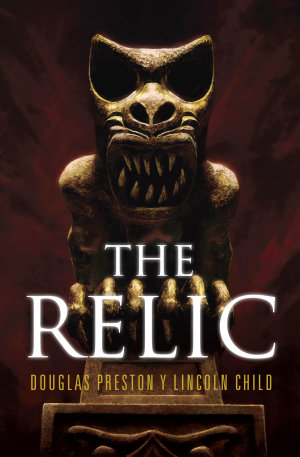
Relic, by Douglas Preston and Lincoln Child

relic2

I liked Relic. Museums in general are cool, and a big, old badass of a place like the New York Museum of Natural History is especially cool. All the details in this book lent a realism to the place that sent chills down my spine. Plus, ill-fated archeological/anthropological digs that disappear in South America with all hands on board (so to speak)? Awesome. And it’s even better when said ill-fated adventurers manage to send a bunch of big, wooden boxes full of all these strange things they discovered back to their museum just before they mysteriously disappear.

The thing with this novel is that if you’re not one of those people who love learning lots and lots of details about famous museums full of old, wet tunnels, or museum politics, or genome sequencing software run by ambitious museum researchers/assholes … then you are probably not going to like it.

But, since it just so happens I am one of those people, let’s proceed.

The characters in this story are pretty standard – there’s the main character (I don’t know if you can call her the protagonist, since the POV shifts around in Relic), young, attractive Margo Green, grad student in ethnopharmacology; then we have Bill Smithback, who is also young, and apparently attractive who is the museum journalist (?).  He is trying to write a “hard-hitting” history of the museum, but he keeps getting blocked by the mean, old director. Oh, and he also hits on Margo every chance he gets. There is a member of New York’s Finest – Lieutenant Vincent D’Agosta – he gets called in to run the investigation when bodies start showing up dead in the museum. Naturally, he wants to shut the whole place down while the cops investigate, and just as naturally, the museum has a big, important exhibit opening in a few days, so closing the place down now would just ruin them. Then there is the fascinatingly mysterious Special Agent Pendergast from the FBI. He’s there because there were similar murders years ago in New Orleans and he wants in on the case.  Pendergast, unlike most FBI agents does not want to “take over” from D’Agosta, so the two form a partnership to track down the killer.

Which brings us to the Relic itself. The big museum opening is going to be about “Superstition” and one of the treasures on display is from the mysterious Kathoga tribe in South America.  The “relic” in question arrived in one of the doomed-expedition’s wooden crates that were, until recently, sitting in storage deep in the museum’s bowels. It turns out the figurine represents a real monster that also arrived in the wooden crates. According to The Extrapolator (!)– the DNA genome sequencing machine – the Relic is part primate and part gecko (and part insurance shill?). It’s also very smart and even thinks in smells, especially human smells. Do I have to tell you this thing craves thalamus hormones? Human thalamus hormones?

Nevertheless, the Relic monster was a lot of fun – it was original in design and origin, plus it rampaged through an entire museum and through all its tunnels. Speaking of the tunnels – I love old, forgotten tunnels almost as much as museums, so a museum with a huge system of old, forgotten tunnels – Squee!

To sum up, Relic is definitely worth a look – if for no other reason than it has a very nice monster. It’s also the first time we meet Special Agent Pendergast, who goes on to have a lot of other adventures with Lieutenant D’Agosta in New York City. Don’t let the size of the book fool you into thinking this might be long and dull. For the right reader it zips along at a good pace, with lots of realistic details, and plenty of chills.

Preston, Douglas and Lincoln Child. Relic. Tor Books, 1995. Print.

The Blob (1998), directed by Chuck Russell

First of all, I’d like to point out that this time I watched the right version. (Although, to be perfectly honest, only after I had already re-watched the original 1958 version first.)

Be that as it may.  Let’s talk remakes, because that’s what the 1988 version of The Blob was – a remake of the original starring a 28-year-old Steve McQueen in his debut starring role as teenager Steve Andrews. The 1988 version had a 22-year-old Kevin Dillon playing a teen, so there’s that.

The 1988 version follows the original pretty closely right up until the point when the guys in hazmat suits show up. It seems that they suspect that an alien microbe has landed on Earth in a meteorite and is now running around infecting people. Only … it turns out the nice, avuncular Dr. Meddows – civilian head of the hazmat guys – is LYING, and The Blob is really a biological warfare experiment belonging to the U.S. that’s crashed here in a satellite and is running around dissolving people!

I don’t know about you, but I hate when that happens.

The movie itself was an odd mixture of Fifties/Eighties sensibilities.  The clothes and hairstyles all screamed Eighties, while the high school scenes (our team wins!), and the small town scenes (with the motherly diner owner feeding the sad, malnourished juvenile delinquent a sandwich even though the diner is closed for the night) all said Fifties to me. The random scene in the car where one of the “teenagers” tries to cop a feel from his passed-out girlfriend was creepily reminiscent of the allegations against Bill Cosby, and as a result had a nice, timeless quality to it. Plus, the jerk gets blobbed, which was also nice.

The special effects in the 1988 version were vastly superior to the clunky 1958 effects (although, the 1958 ones were not that bad, I thought). Thirty years of advances in special effects allowed the filmmaker to show us all kinds of variations on the Blob theme, the best ones being the “ceiling Blobs,” and the “telephone booth Blob,” and the “scaling the town hall Blob”. I also liked the pretty crystalline Blob when it gets flash-frozen at the end.

Speaking of which, in the 1988 version, a girl – played by actual teenager, Shawnee Smith – figures out that the Blob doesn’t like cold, and she sets about fighting back with a fire extinguisher just like in the 1958 version. Of course, since this was the Eighties they had to do it up bigger than that, so the juvenile delinquent/heartthrob, Kevin Dillon, goes and gets the town’s snow-making truck to try and finish the Blob off. (In case you were wondering, size does matter, it seems. At least when you’re trying to kill evil, covert science experiments gone awry.) And then … and then, once the Blob is lying all over Main Street in these pretty, pastel crystals, the town mechanic says something like, “Let’s get this thing put in the town’s ice house before morning.” (!)

The one bit of wisdom I learned from both versions is this – If you see a meteorite streak across the sky at night, don’t try to track it down. But if you do find out where it landed, don’t go near it. But if you do go near it, then for God’s sake, don’t poke the glowing crack in said meteorite with a stick. And if you do poke it with a stick, for the love of God, don’t lift the stick coated with the weird, alien goo up close to your face to take a better look at it!

Are we clear on that? Good. I can’t take any more versions of The Blob.

“Pickman’s Model” is “The Outsider” who heard “The Call of Cthulhu” – stories by H.P. Lovecraft

Pickman’s Model” is one of my favorite Lovecraft stories. I first read it as a teenager, which is the very best time to read anything scary, in my humble opinion. Even though the first-person narration is what makes this story so immediate, I kept wishing that Lovecraft had written it in third-person instead, just so I could hear the other half of the discussion. More than the other stories we had to read, this one felt like I was listening to just one side of a crazy person’s conversation, and it was a little maddening. But maybe that was his intention…?

Anyway, the narrator knows an artist – Richard Upton Pickman — so talented, but at the same time, so subversive that people who once embraced him are now terrified to be in the same room with him. Except for our storyteller, who is kind of a belligerent jerk.

I loved the setting and the gradual, but not too gradual, build-up of terror in this story. I could actually “see” the cramped, jammed, dirty, ancient streets and alleys and houses Lovecraft describes as the narrator accompanies Pickman to the artist’s other studio – the one where he paints all those awful, awful pictures. Pictures that are so lifelike it’s scary!

The little prologue to this story in my book says that Lovecraft had an actual house in the oldest part of the city— the North End of Boston – in mind when he wrote this story. Meaning that he’d actually been in that old house with the dark basement, and that it had a huge well dug in the floor with a wooden cover over it. *shudder*

The next story, “The Outsider” was written in 1921 (five years before he wrote “Pickman’s Model”), and it kind of shows. The narrator in this one is lost, lonesome and sad. For the first few pages, I wasn’t exactly sure what was going on, and it was a little hard to care about this character because of that. However, Lovecraft’s description of the narrator’s break for freedom was terrific. He climbs above the trees only to end up at ground level, in a cemetery. Oops. The cat’s out of the bag now.

Still, I felt bad for the guy. This afterlife, while lacking all the reported horrors of hell, is also lacking any of the supposed delights of heaven. It’s just a kind of … existence. However, despite that crappy party he crashed, the narrator’s story ends with him actually enjoying his newfound freedom in some faux-literary-Egyptian-name-dropping purgatory. Yes, the ending was a little obvious, but these were different times, so I’m gonna give HPL a pass.

Finally, the great, the immortalThe Call of Cthulhu” – meh.

Although this story is the start of the great, so-called “Cthulhu Mythos” (pause as fan-boys everywhere genuflect at the mention of his name), it should have been so much better. The premise was good – artists everywhere having strange dreams during the same span of time; the equally strange death of the narrator’s relative, who happened to be a professor of ancient languages; a bizarre journal left behind by said relative, full of “disjointed jottings, ramblings and [newspaper] cuttings”, along with a clay bas-relief featuring “a pulpy tentacled head” on a “grotesque and scaly body with rudimentary wings” (357).

Throw me the keys – I’m going to gas up the Mystery Machine now.

Yes, there is so much in this story that should have been great. Instead, Lovecraft goes on and on until only the heartiest of readers are still conscious at the end to appreciate his genius.

Nevertheless, you absolutely MUST read “The Call of Cthulhu” if you want to be a horror writer, or even just a well-read horror fan. Sorry, I don’t make the rules. They just are.

Lovecraft, H. P. The Complete Fiction. Barnes and Noble, 2008. Print.

Godzilla (2014), directed by Gareth Edwards

I wasn’t that crazy about the 2014 version of Godzilla, despite the hype of having Bryan Cranston in it, hard on the heels of his hit show, “Breaking Bad.” For one thing, Cranston’s character, Joe Brody, is killed fairly early in the movie – right after a giant, winged MUTO (Massive Unidentified Terrestrial Object) escapes and disappears who-knows-where.

But let’s start at the beginning. Godzilla’s “origin story” gets a reboot, along with his appearance. It seems that Godzilla just sort of “happened” in the Pacific, and all those U.S. nuclear weapons’ tests in the 1950s were really just attempts to destroy him. (Miserable failures, of course.)

Flash forward to 1999, and Joe Brody is the supervisor of a fictional nuclear power plant in Japan.  When mysterious earthquakes in the Philippines cause tremors and a nuclear accident at Brody’s plant, lives are lost. Brody’s wife, Sandra, is one of the fatalities, and losing her sends Brody’s mind over the edge.

The people parts of this Godzilla movie were better than average, I have to admit. The Kirk/Spock death scene remake with Brody and his wife (with the wife, Sandra, playing the Spock part where she dies of radiation poisoning on the other side of the glass from Brody) was pretty good. Fifteen years later, the couple’s grownup son then goes on to fight the monsters indirectly responsible for killing his parents. This gives the human element to the story some nice closure.

However, this is a Godzilla movie, so let’s examine the monstery bits. First of all, this Godzilla is the biggest one yet – 350 feet versus the original 100 or so feet – and this Godzilla’s face is reportedly a combination of a bear’s face, a dog’s face and an eagle’s face. Whatever the stats are, they give the Big Guy a face and head that make him look like the monster version of a pencil-neck geek. *shudder*

The MUTOs are a weird attempt to drag in some of the many “auxiliary” monsters that populated all the Godzilla movies after the first one. The two in this movie – and they are in this movie a LOT more than Godzilla is – just kind of appear out of nowhere in the beginning of the movie. Two giant “spores” are found, only one just sits there, dormant, while the other has “hatched” and scurried off into the sea. (Also, one is assumed to be male, and the other female, based on ….?) Their origins are left to the imagination, but the fact that they spend most of the movie trying to get together in San Francisco to do “the nasty” had me hoping they weren’t siblings, because, Hello, they were in the same “nest.” Ugh. Anyway, it seems there’s a psychic connection between the MUTOs and Godzilla – also, mercifully, unexplained – that has all three of the beasties show up in the same place, at the same time.

There is the requisite “epic battle” between Godzilla and the MUTOs. Godzilla bashes the male MUTO’s head upside a building, and then kills the female MUTO by pouring his hot, atomic breath down her throat in a disturbingly sexual scene. (Not cool, Big G.)

Finally, can anyone explain why the military kept throwing atomic missiles, bombs, and piñatas at these MUTOs — despite ample evidence that the creatures were gobbling up that atomic shit for breakfast, lunch and dinner?

Godzilla (1998), directed by Roland Emmerich

I watched the 1998 version with Matthew Broderick because I could not find the original 1954 Gojira version anywhere on TV, or even the bastardized, Americanized 1956 version starring, of all people, Raymond Burr. And because I just wasn’t that thrilled with the Bryan Cranston 2014 version.

Let me say right off the bat that Godzilla will always be “King of the Monsters” to me. I grew up watching this guy destroy Tokyo, and breathe his “atomic fire” breath at all the planes and Army tanks that tried to kill him. Even though Godzilla was originally intended to be a metaphor for the dangers of nuclear annihilation, he quickly became a “good guy” in all of the sequels he starred in. It was always “Godzilla vs. The Bad Monster”. Whether this was a kind of political flip-flop on the part of the studio that owned Godzilla – nuclear power was bad, but now it’s good (doubtful) – or just that Godzilla was just so awesome as a character and as a monster that he transcended his original bad guy role. Personally, I vote for the latter.

Be that as it may, the 1998 version with Matthew Broderick was an odd mess. First, we have in Matthew Broderick, an actor who is gifted, and charming, but one who is best suited, in my opinion, to light comedy, ala “Ferris Bueller’s Day Off.” How he got the lead role in an expensive monster movie is beyond me. All I can think is that someone owed him money. His “smart, gentle science nerd” character fell flat. As in “from a great height” flat. Disaster.

Hank Azaria, on the other hand, as the TV station cameraman, Victor “Animal” Palotti, was great. I could watch him all day long.

The 1998 movie boasted a Godzilla redesign – faster, smarter and toothier – along with, mysteriously, a LOT of humorous bits in it, mostly with the characters’ names. The TV anchor, a deplorable human being played by Harry Shearer, was called Charles Caiman (an alligator-like lizard); then we had Mayor Ebert, and the actor looked a lot like film critic Roger Ebert. The mayor’s “sidekick” was a fellow named Gene, and he looked a lot like Ebert’s film critic partner, Gene Siskel.  The French intelligence agents trying to help Matthew Broderick kill Godzilla also had “cute” names – Jean-Luc, Jean-Claude, Jean-Pierre, and Jean-Philippe. They were on a never-ending quest to find some “real” coffee in America. Ha-Ha.

This movie also suffered from a director who did not appear to take Godzilla seriously. Despite having directed some good movies — like “Stargate”, “Independence Day”, and even, “The Patriot” — this version of Godzilla was loaded with scenes showing how much Roland Emmerich  just LOVED Spielberg’s “Jurassic Park.” Along with a nice dose of “Alien”- lust thrown in for good measure.

(And don’t even get me started on the whole “parthenogenesis” storyline in this version. While technically, some lizards do reproduce that way, it was obviously just an excuse to scatter the aforementioned “Alien”-like eggs all over Madison Square Garden.)

Since Japan was occupied by U.S. forces until 1952 – during which time there was a ban imposed on any, and all, information about Hiroshima and Nagasaki, including about atomic radiation and its lingering aftereffects – Japanese filmmakers who wanted to show the outside world all the horrors of the atomic bomb had to tread carefully.  So it was in that repressive, tense climate that Godzilla was conceived. Designed as a complex, anti-war, anti-nuclear power, anti-U.S. – occupation, rocking, stomping metaphor, Godzilla kicks ass.

What I’m saying — Roland Emmerich should have shown a little more respect.

Snow, by Ronald Malfi

This was a very interesting monster story.

Set in the present, a divorced dad named Todd Curry is trying to fly home for Christmas to see his son. However, when a huge snowstorm descends on the Midwest, hundreds of travelers are stranded at the Chicago O’Hare airport on Christmas Eve. Because Todd’s marriage ended as a result of his making promises he couldn’t keep, he is feeling a LOT of pressure to show up on Christmas morning, as he’d promised his son. So, despite the fact that no sane person would attempt to drive to Iowa from Chicago in a snowstorm, Todd plans on doing just that. Guilt, especially parental guilt, is a very powerful motivator.  So, renting the last Jeep Cherokee left in the airport, Todd, along with Kate Jansen, a woman who’d been heading to Des Moines to spend Christmas with her fiancé and his “atrocious” family; and Fred and Nan, a couple who were traveling to their daughter’s for the holidays, four desperate, foolish people head out into the strangest, most deadly snowstorm in history.

I loved the monsters in this story – they were so bizarrely unique. Who hasn’t been in a snowstorm that was so fierce, with winds so strong, that it almost seemed alive? I’ll bet anything that was how the author came up with the idea for his creatures. This did remind me, quite a bit, of the movie, “30 Days of Night”, but that didn’t bother me. Actually, I thought it was pretty cool that you could pull off the same basic story with two very different monsters and still have it work. As in “30 Days,” there was a good assortment of townspeople, who were all trying to survive in their own ways, and between the snowstorm and the alien’s initial electromagnetic pulse that disabled all communication with the outside world, everyone was good and isolated. Plus, once our little band makes it to the town, everything that happens from then on, happens in the town. And, since I’ve already established I have some kind of weird “thing” for isolated, snowy settings, this story fit the bill very nicely, thank you very much.

I also liked how the alien snow monsters took over the town everyone ends up in — Woodson – by turning the human inhabitants into “skin suits” or sock puppets. And those eerie, faceless kids! Creepy, and sad.

I did have some gripes, mind you. The shifting POVs were a bit odd. For instance, one of the townspeople, Shawna, is in the prologue, starting the book before we even meet Todd, the protagonist. And every time we see Shawna, it’s through her POV. (Most of the rest of the book is told through Todd’s POV.) However, despite being the star of a sort of parallel-to-the-main-action story-line, Shawna struggles and hides and survives – up until page 190, more than half the book!– before the author just kills her. Personally, I think if a character is important enough to have her own POV throughout most of the story – when no one else does besides the protagonist — you would figure out a way for her to survive to the end! But maybe that’s just me.

We do meet a lot of characters in this book. I liked some of them, others not so much. Todd was one of the “not so much” variety. Even though I understood and sympathized with him, and his desire to “get home for Christmas,” I just didn’t like him all that much. Despite fighting and defeating the bad aliens, and having a happy ending with his son, Todd, unfortunately, ended the book the same way he started it as far as I was concerned – He was a hapless loser who tried to do better.

Malfi, Ronald. Snow. 2nd Ed. North Webster: Dark Fuse Publications, 2012. Print.


The Thing, directed by John Carpenter

Based on the John Campbell novella, “Who Goes There,” “The Thing” has a doozy of an alien monster, a gigantic, ancient UFO that crash-landed on Earth thousands of years ago, an isolated scientific research facility in Antarctica …and Kurt Russell in a sombrero.

There was so much that was great about this movie. Well, let me rephrase that — the monster in this movie was great. The Thing was an extraterrestrial lifeform that could assimilate other lifeforms and then imitate them so perfectly these imitations fooled the real people who’d known them for months. Once everyone realizes just how talented this creature is, paranoia sets in big-time. It could be any of us, says one of them. And they’re right.

The good things about this move (for real, this time) – the monster — special effects by Rob Bottin, with an extra-special appearance by Stan Winston on the dog-alien – superb. Since it could literally be anyone, or anything, Carpenter obviously had a lot of fun with it. My favorite monster-form is a toss-up between the head that sprouts spider legs and scurries off to hide, and the one that bites off the doctor’s arms in the middle of an autopsy of one of the victims.

I also loved the setting. I have some kind of “thing” about isolated Antarctic research stations – they just seem really creepy and very isolated to me. I can’t think of a worse place in the world to run into an alien monster, because if the monster doesn’t get you, the cold and snow will. (You know, the Overlook Hotel in The Shining reminded me a LOT of an Antarctic research station, especially once the snow started falling.)

What I didn’t love about the film – mostly Kurt Russell’s character, MacReady. This guy is supposed to be a helicopter pilot, and yet, as soon as things get a little crazy, his character takes charge and starts pushing everyone around. Also, in an attempt by the director to let us know MacReady is an alpha male, Carpenter dresses him in a leather bomber jacket and a sombrero. In Antarctica, where the average low temperature is – 59 degrees Fahrenheit. And MacReady wears that outfit pretty much through the whole movie. Sigh.

In a situation like that — because what if MacReady had tripped and broken his neck in the first scene, or something —  I expect there to be a leader of the scientific team, if not a couple of them, depending on what’s going on at the station. Nope. There is a sorta-military guy, the station commander, Garry. However, even though he has the only gun, he spends most of the movie looking lost and uncomfortable.

Which brings me to my next bitch. The cast of this movie was all guys (this was 1982, after all, before the invention of women scientists), and, except for Kurt Russell, they were all solid character actors. However, because of their backgrounds (character actors don’t get as much screen time as the lead actors do); these guys were weirdly stiff and constipated-looking. It was as if they weren’t used to having the camera trained on them for the entire movie. (Russell had been playing the “leading man” ever since his Disney days, so he was relatively “natural”.) Honestly, even for scientists, they were annoyingly grim and tongue-tied. If “socially-awkward nerd” was what these actors were going for, they kind of overshot the mark, in my opinion.

To sum up – the monster was terrific. The setting was good. The acting was sluggish. And the sombrero was stupid.

But go watch it anyway.

P.S. For all my near-sighted friends who said, “Gee, I didn’t even notice the hat…”

“An American Werewolf in London,” written and directed by John Landis

I just finished re-watching this movie from 1981, and I was frankly surprised by how well it’s held up. I was also glad to see, once again, the original version, and not the “sanitized for my protection” censored version that always pops up on TV this time of year.

The story is about two American college students on a backpacking tour of Europe, starting in England. Friends David Kessler (played by David Naughton) and Jack Goodman (played by Griffin Dunne) decide to stop in a pub called The Slaughtered Lamb, hoping for some hot food and friendly company on a dark and stormy night. They get neither, or course, and when they foolishly inquire about that strange pentagram carved in the wall, you can feel the temperature in the room drop about sixty degrees. Feeling unwanted, the boys head back out into the night, with only the ominous advice to “Watch out for the moon” and “Stay on the road” to send them on their way.

They wander off the road, as irresponsible American backpackers are wont to do, and get lost.  Then they get attacked by the monster on the moors – a werewolf. Jack Goodman is killed, but David Kessler escapes death when some of the men from the pub show up and shoot the werewolf. Kessler wakes up in a London hospital three weeks later, disoriented and telling a crazy tale about being attacked, not by “a lunatic” as the official police report says, but by a giant dog, or wolf. Oh, and he also starts getting visits from his old, dead friend, Jack.

Jack’s visits were some of my favorite parts of this movie. Even though he is a steadily deteriorating corpse, he always manages to say something funny.

The special effects in this movie — specifically the werewolf transformation scene, and Jack’s gradual slide into decay – won Academy Awards, and rightly so. Rick Baker’s work was awesome.

Special effect aside, however, my absolute favorite part of this movie was the soundtrack. Consisting of a bunch of rock and roll classics, all referring to the moon – Bobby Vinton’s “Blue Moon,” Van Morrison’s “Moondance,” Credence Clearwater Revival’s “Bad Moon Rising” – these tunes were a genius addition to the film. Where oh where, you ask, was Warren Zevon’s “Werewolves of London”? Nobody knows.

A couple of things about this movie that bugged me was the astonishingly naïve Nurse Price (played by Jenny Agutter) who, like an idiot, falls for her crazy patient and then brings him home once he’s out of the hospital.  Sigh. I expect that kind of reckless abandon from a doctor, but a nurse?

Speaking of doctors, I really, really, really disliked Kessler’s doctor, Dr. Hirsh, who was so patronizingly dismissive of the nurses at first. But then, for some reason, he decides to investigate Kessler’s story – even going to the trouble of visiting The Slaughtered Lamb on his day off – and suddenly, he’s a character I grow to like. He even treats Nurse Price like an equal (or at least a fellow human being) by the end.

One of the best throwaway bits in this movie involved that strange porno movie playing in the theater near the end where Kessler meets up with Jack again, and Jack has brought along some of Kessler’s werewolf victims from the previous night. The porno movie seems to be nothing but a bunch of sex and nudity interspersed with wrong number phone calls, and mistaken identity encounters. Hilarious.

This film was famous for being both funny and horrifying, and while it definitely was both of those things, it also felt a little abbreviated.   The ending was abrupt and unsatisfying, I thought.  Instead of some kind of closure, we’re treated to Kessler’s naked, bullet-riddled body lying in a London alley surrounded by his girlfriend and a British SWAT team. The End.

Really, John?

I kind of expected more from the guy who gave us “National Lampoon’s Animal House”, and the outstanding “Blues Brothers.” But what do I know?

The Friendly Editor

Advice from an Editor's Desk

Weirda Curiosities

Paranormal Tarot Magick

Dirty Sci-Fi Buddha

Musings and books from a grunty overthinker

Really Awful Movies

Horror, action and exploitation movies that aren't really awful at all.

One More Story

Tell your ghost story. Read some of mine.

Ryu Cope

WRITER/FILMMAKER/URBAN MISFIT

Kristen Lamb

Author, Blogger, Social Media Jedi